Devon · PL1-PL9
Thermal imaging survey in Plymouth
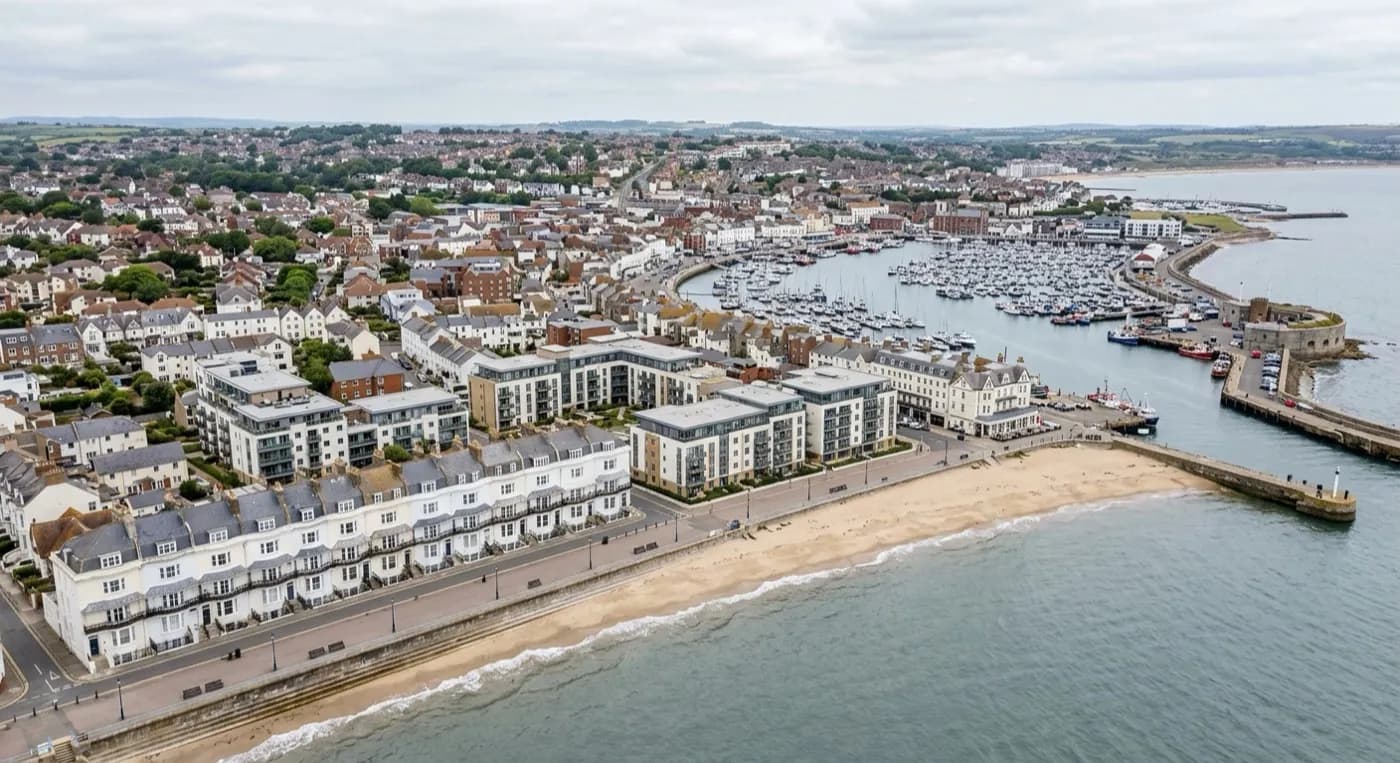
Thermal surveys in Plymouth, where a rebuilt post-war city of flat-roofed blocks sits beside Victorian terraces and modern waterfront apartments, three heat-loss pictures in one city.
A rebuilt city, and what that means for roof types
Much of central Plymouth was rebuilt after the war, and that history shows up directly in the roofscape: flat-roofed commercial and residential blocks dominate the centre in a way that is unusual for a South West city of this size, alongside surviving Victorian terraces in the Hoe, Stoke and Mutley areas that carry the same solid-wall thermal picture found in older towns across this coverage area. Extensive post-war estates fill out the wider city, and modern waterfront apartments at Royal William Yard and Millbay bring the newest construction standard into the mix.
That spread means a Plymouth booking often starts by establishing which of these three broad building types a property belongs to, flat-roofed post-war block, Victorian terrace, or modern apartment, because the likely thermal finding and the right service to book differ meaningfully between them.
Exposed to the Sound, and salt reaching well inland
Plymouth is open to the Sound and to south-westerly gales coming straight off the Channel, and salt-laden wind reaches well inland across the city rather than staying confined to the immediate waterfront, with the exposed high suburbs at Crownhill and Southway catching the weather almost as hard as the harbourside itself. For the flat-roofed post-war stock, that exposure is a moisture question as much as a heat-loss one, wind-driven rain finding its way to parapet gutters and roof edges that are harder to inspect than a pitched roof, which is exactly the kind of finding the damp and flat roof service on this site is built to catch.
For the Victorian terraces, the pattern is closer to any other solid-wall town in this coverage area, bridging at party walls and window reveals, complicated in Plymouth's case by a actually exposed, salt-laden climate that keeps those walls wetter for longer after weather than a more sheltered inland terrace would experience.
Flying a large, varied city
For flat-roofed blocks, an evening flight after a bright day is usually the right window, giving the roof time to show whether any area is holding moisture as it cools. For the Victorian terraces and modern apartments, a dawn flight after a cold, clear night is the more useful read.
Multiple addresses across the city, useful for a managing agent with a small portfolio, are often flown in a single visit where they sit reasonably close together.
Around Devonport Dockyard and the Barbican and Sutton Harbour, the housing mix includes some of the city's oldest surviving stock alongside more recent waterfront conversion, a actually wide spread of construction ages within a short walk, similar in principle to Exeter's mixed centre but on a larger, more exposed scale given Plymouth's position on the Sound. A survey covering a property in this part of the city is planned with that mix in mind, checking which specific building type is in question rather than assuming a single pattern across the whole harbourside.
Behind the survey
What Plymouth clients are actually buying
CAA registered
Operator ID and Flyer ID held, plus the A2 Certificate of Competency. Every flight, including the early morning and after-dark ones this survey often needs, is planned to the rules that apply to the site.
Radiometric thermal camera
A DJI Mavic 2 Enterprise Advanced carrying a 640 by 512 radiometric sensor. Radiometric means every pixel is an actual temperature reading, not just a colour, which is what makes a genuine comparison across a roof or a wall possible.
100 megapixel visual pass
A DJI Mavic 4 Pro with a Hasselblad camera flies alongside the thermal camera on every job, so a warm or cool patch on the thermal image can be matched back to the actual roof feature or wall detail underneath it.
Insured with Coverdrone
Full commercial cover for the operation. Certificates go to managing agents, landlords and insurers as a matter of course, without anyone having to chase for them.
Nearby
Also covered around Plymouth
- SaltashThermal surveys in Saltash, where old waterfront cottages on steep streets sit below Victorian villas and extensive post-war estates on gently exposed higher ground.
- TavistockThermal surveys in Tavistock, where a remarkable Victorian planned centre in solid Hurdwick stone sits in one of the wettest valleys in the network's coverage.
See what it can and cannot see
Book a thermal survey in Plymouth
Send the address and what is worrying you. Sam Hembury will come back with a fixed price and the next slot that suits the weather.